Frequently asked questions
What materials make an industrial roller brush food-grade?
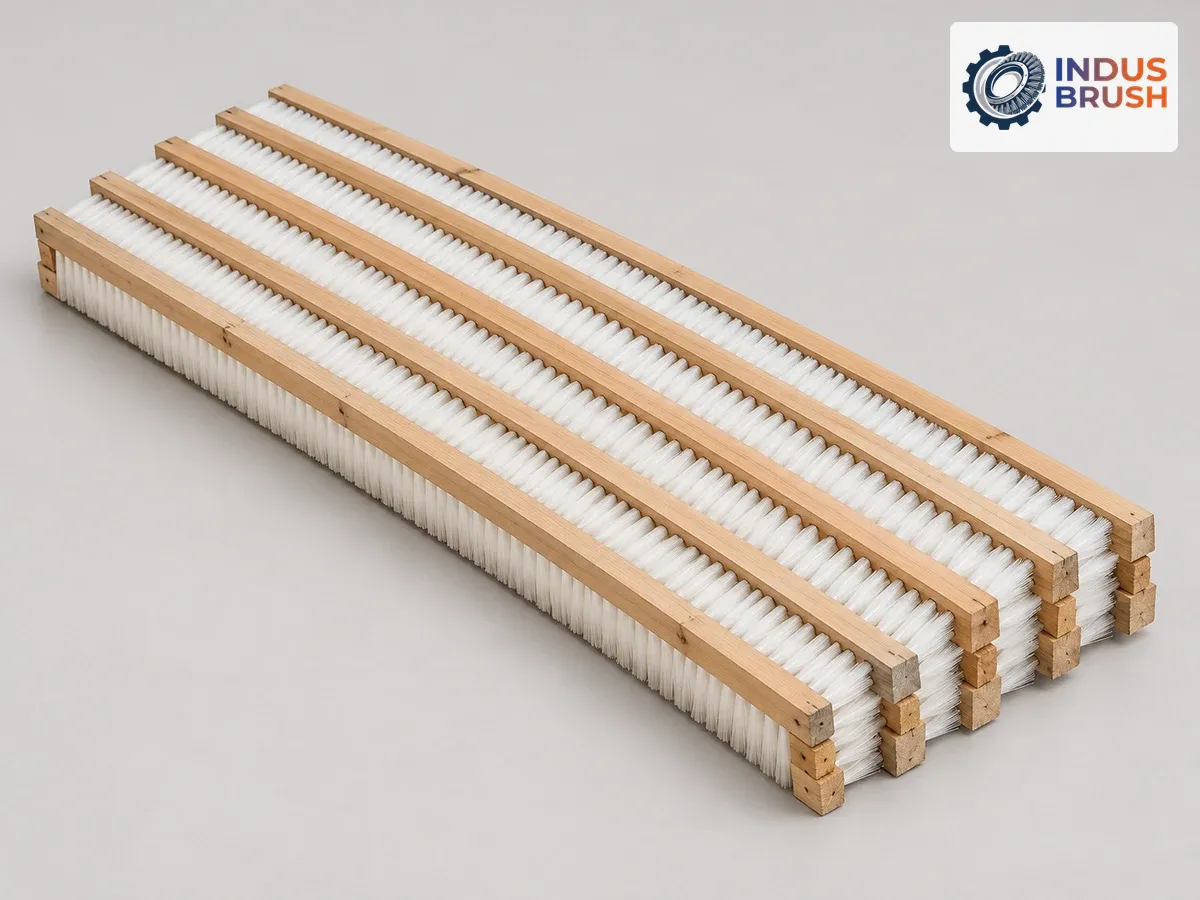
A food-grade roller brush combines FDA 21 CFR §177.1500 compliant virgin PA6.6 or PA6.12 nylon filaments with food-safe virgin polypropylene (PP), HDPE, or POM cores. Tufting uses corrosion-resistant stainless steel staples to prevent filament pull-out and bacterial accumulation, and shafts are machined from food-contact SS304 or SS316 stainless steel to withstand high-pressure washdowns and chemical sanitizers.
Which roller brush configuration prevents bruising on soft-skinned citrus and apples?
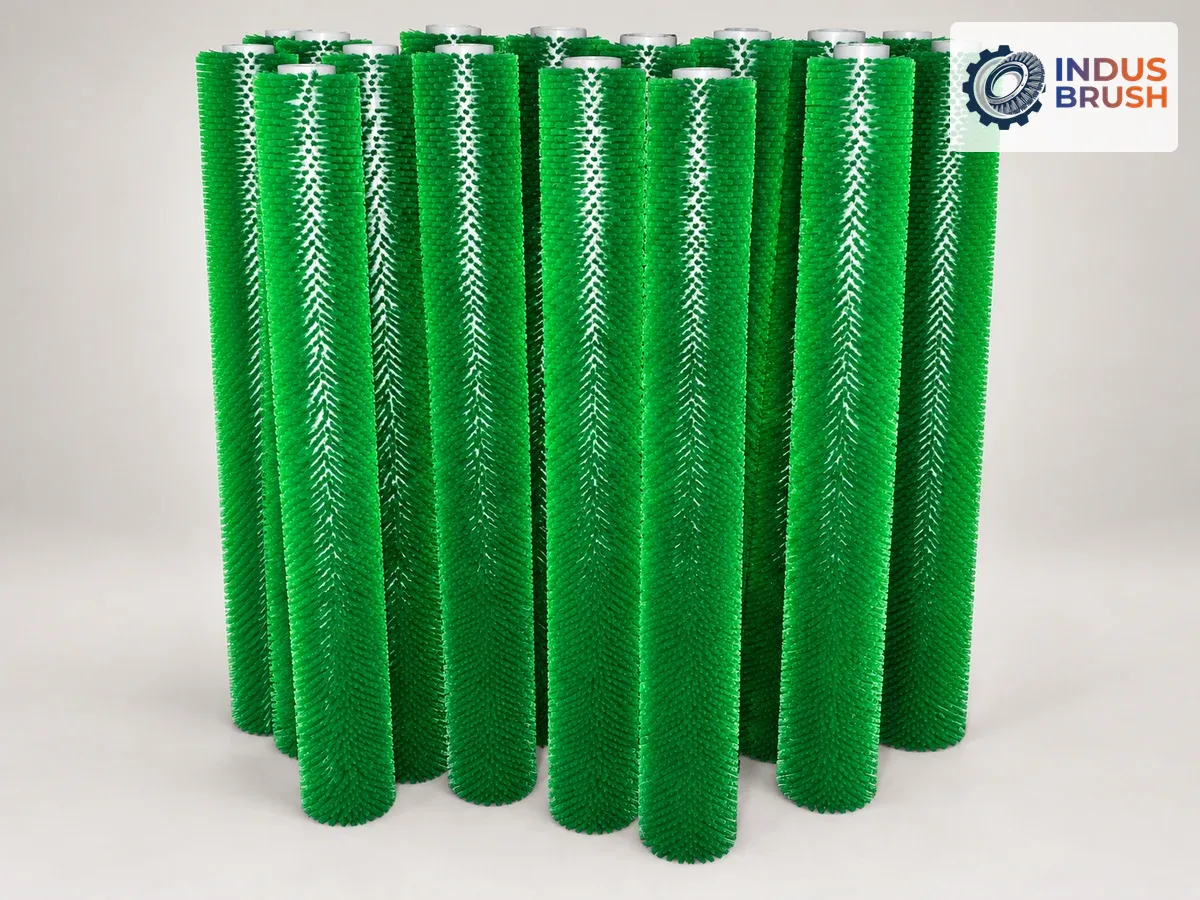
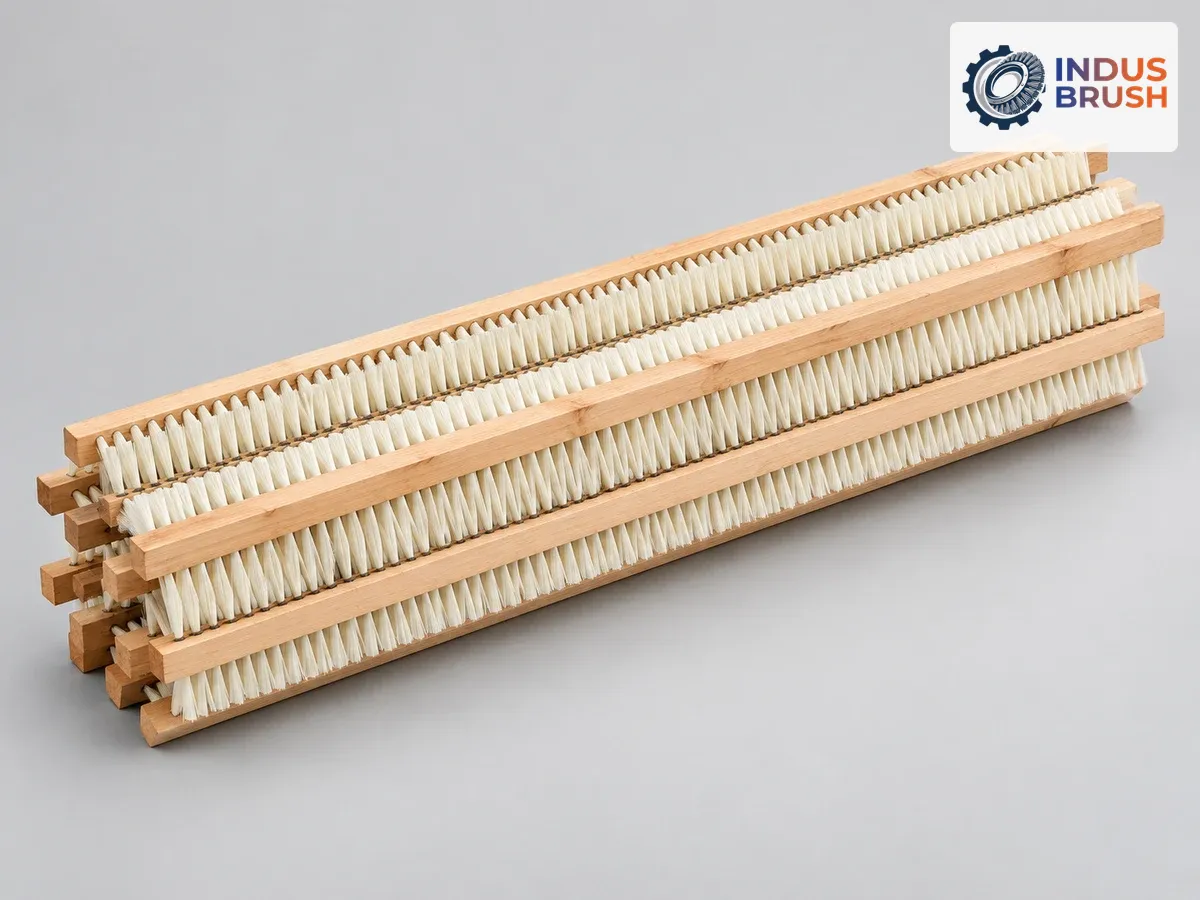
Soft 0.20 mm to 0.25 mm crimped food-grade nylon filaments combined with spiral or hi-low trim geometries prevent fruit bruising. Rather than dragging against produce, the spiral grooves gently rotate each fruit 360 degrees across the roller bed, ensuring thorough cleaning under spray bars with minimal contact pressure.
Are washing rollers and fruit waxing or polishing rollers interchangeable?
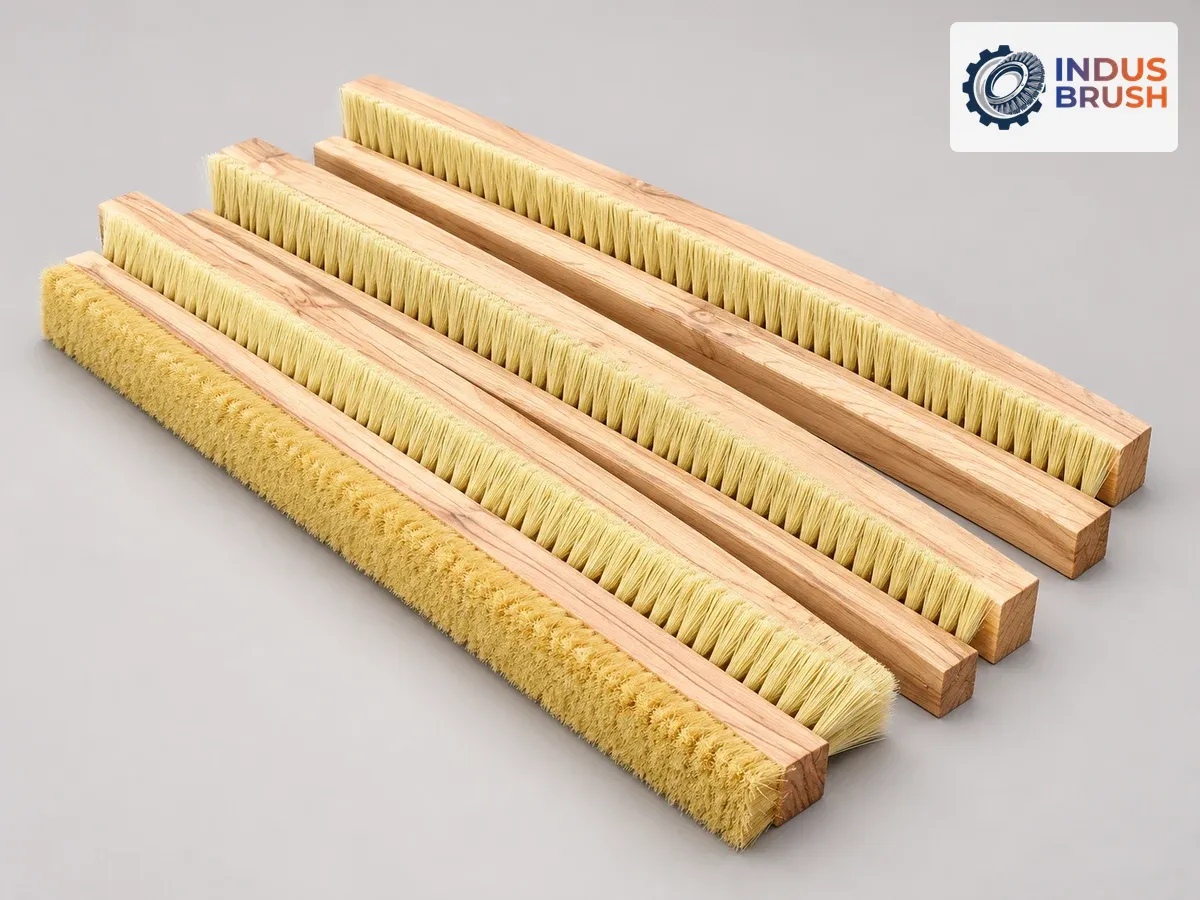
No. Washing rollers use synthetic nylon bristles designed for wet soil and pesticide removal, whereas polishing and waxing rollers use dense natural horsehair or Tampico fibers. Horsehair is uniquely suited to spread wax emulsions smoothly and buff fruit without streaking or scratching.
What shaft and drive configurations can IndusBrush supply for food processing machinery?
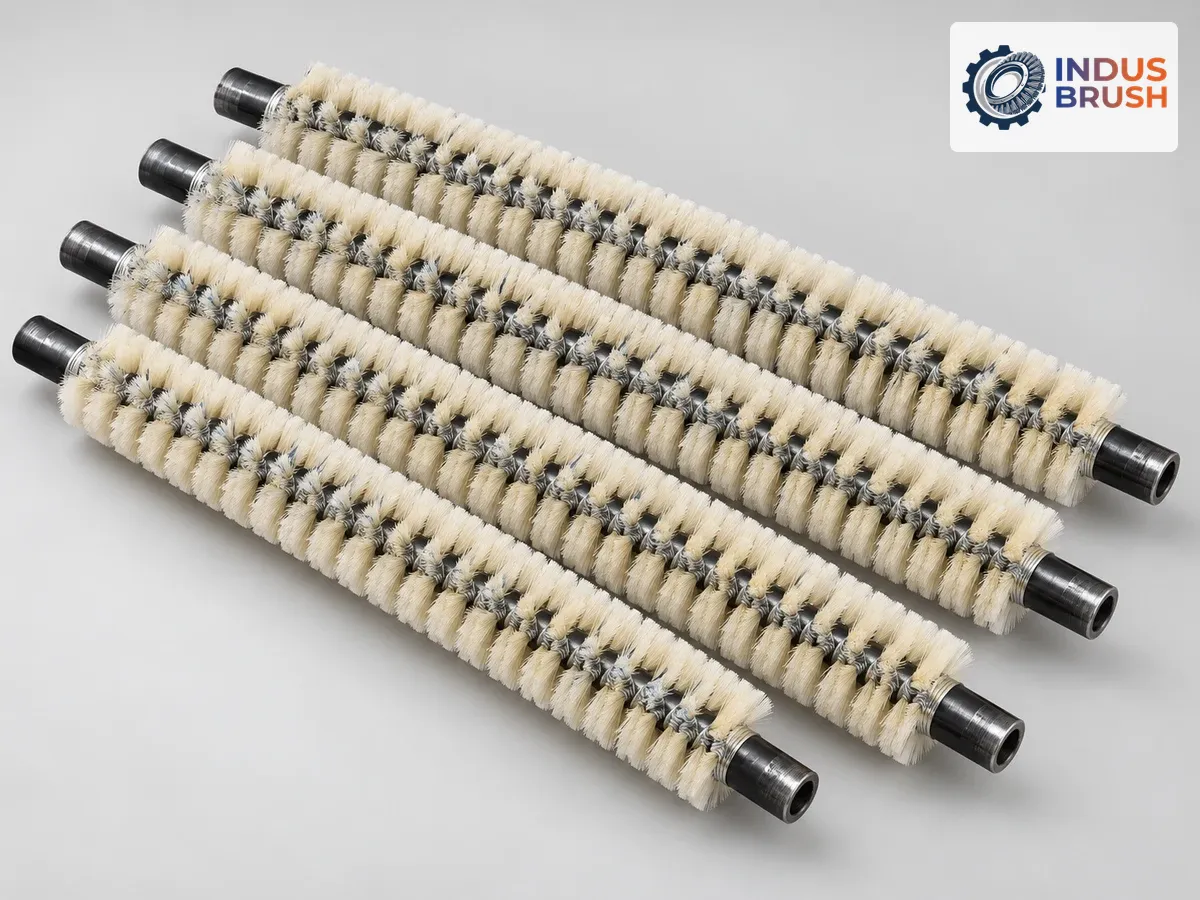
We supply complete shafted assemblies or replacement hollow-core sleeves. Drive configurations include precision-ground SS304/SS316 round shafts with keyways, 1-inch (25.4 mm) square bores, hexagonal drives, stub shafts, and split-core sleeves matching standard packinghouse washing and grading machines.
How do I specify a replacement roller brush for a fruit washing line?
Provide the working face length, outside brush diameter (OD), core OD, shaft or bore dimensions with keyway/drive details, produce type (apples, kinnow/citrus, mangoes, potatoes), wash chemistry, and required replacement quantity.